
 +97142730567
 +966500328429
 +96822344588
Wired Nurse Call System
Dedicated cabling connects devices to the controller. Common in new builds and major refurbishments where containment is planned. It offers stable operation, but needs more installation coordination.
 Book Demo
A nurse calling system connects patients with nursing staff so every request for help reaches the right person, with the room and priority clearly shown. AL IMTEDAD supports hospitals, clinics and care homes across the UAE with wired, wireless and IP-based nurse call solutions, from design and installation to integration and annual maintenance.
A nurse call system is a communication system that lets patients request assistance from nursing staff and lets staff receive, identify and respond to those requests. It is also called a nurse calling system, patient call system or hospital call bell system.
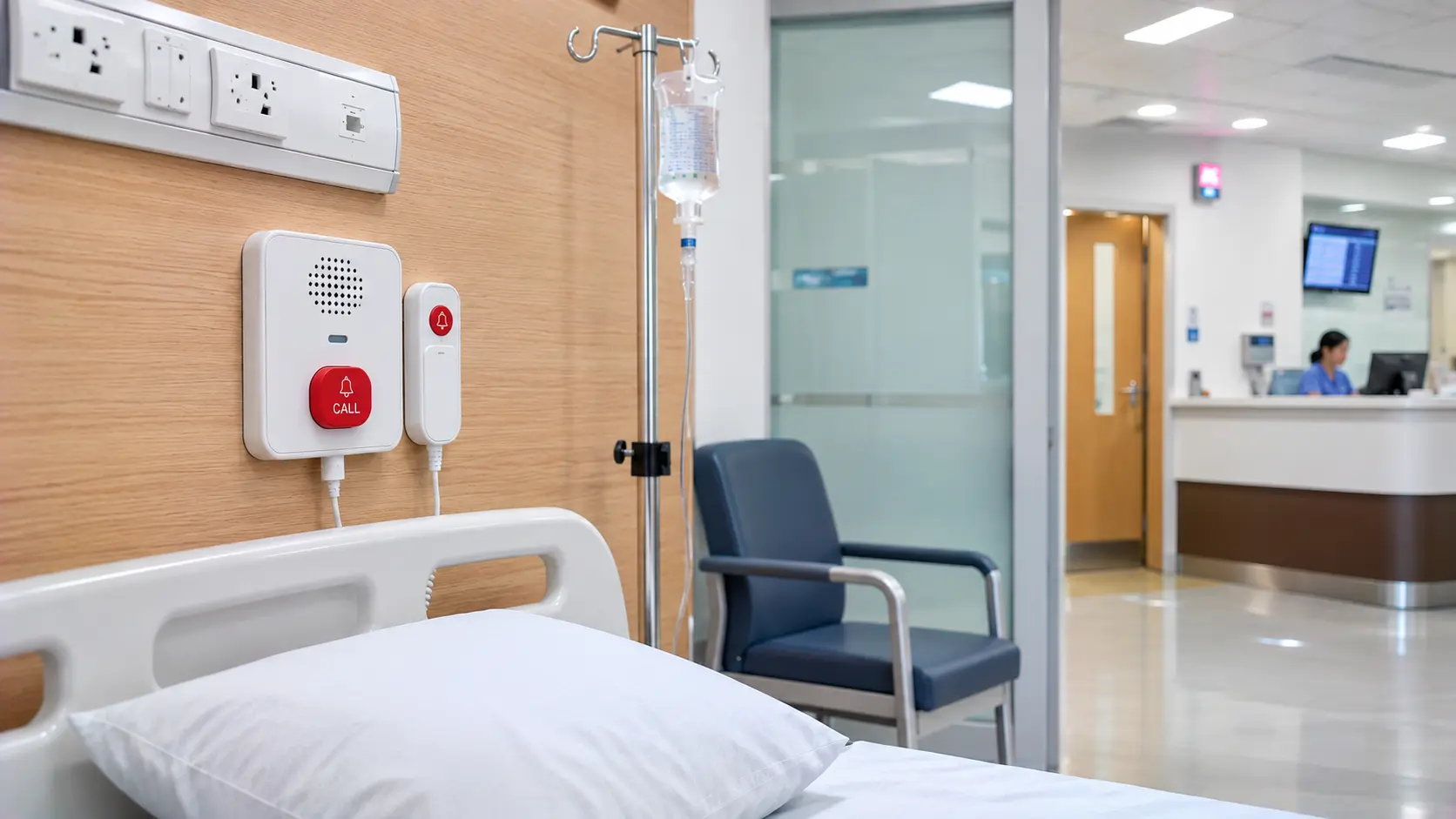
The patient presses a nurse call button or pulls a bathroom emergency cord. In an emergency, a Code Blue call can be raised from the room.
The controller identifies the room, bed and call type, including whether it is a routine call or a Code Blue.
The call appears on the corridor light, nurse station display and, if configured, staff mobile devices. A Code Blue shows a distinct light outside the room, so any nurse passing by can see it and step in at once, and a separate alert at the nurse station for the nurses who respond from there.
Where intercom is available, staff speak to the patient before reaching the room.
Staff attend and the call is cleared according to the system configuration.
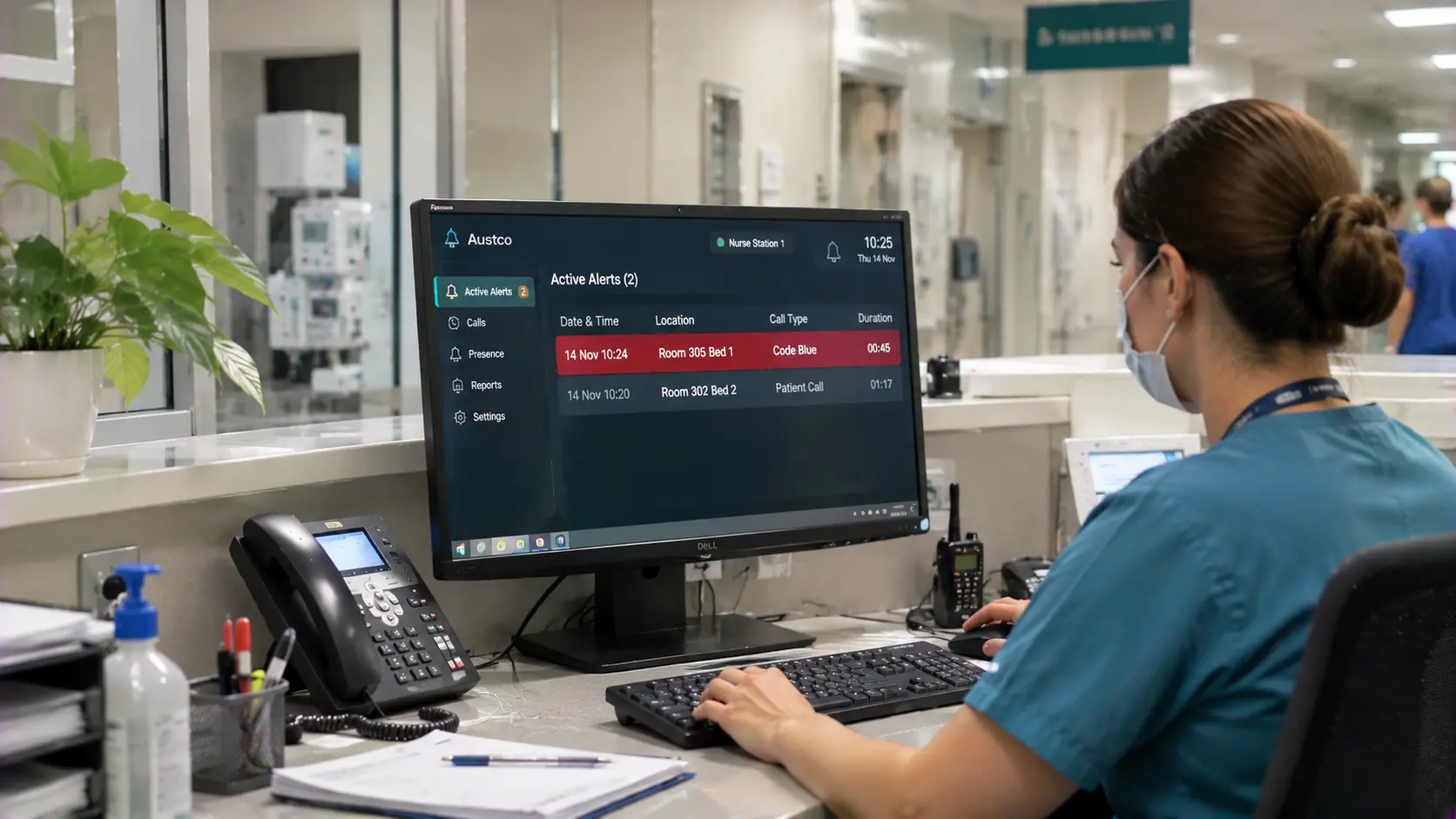
Workflows vary by system. Call priority, intercom, presence registration and logging are configuration options, not standard in every system.
Help is always within reach.
Calls are prioritized by urgency and location.
Event logs, where supported.
A Code Blue is a cardiac or respiratory arrest emergency, and every second counts. With a Code Blue configured on the nurse call system, the alert reaches staff in two places at once:
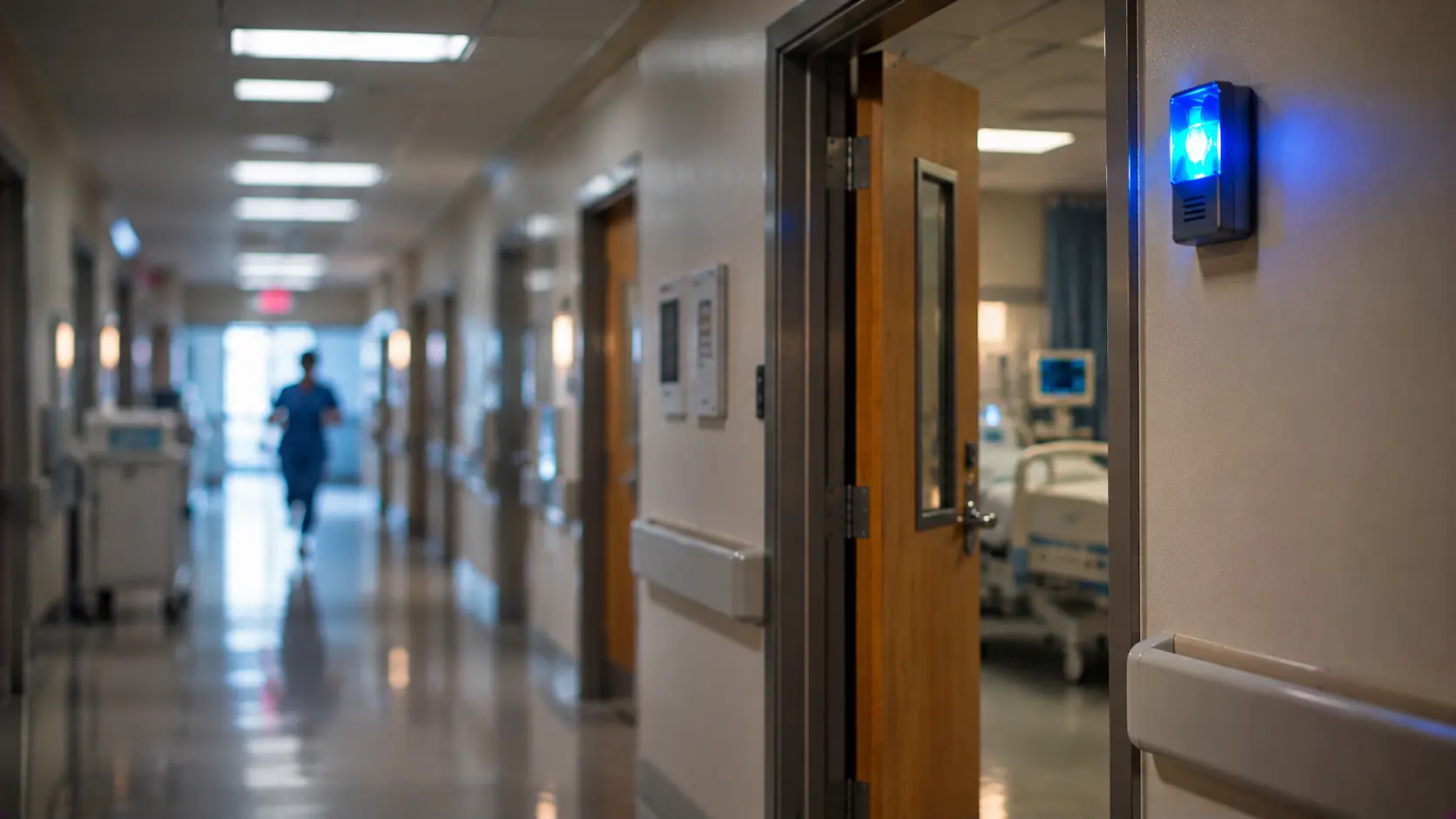
The corridor light shows a Code Blue indication. Nurses who happen to be passing the room can see it immediately and start helping, without waiting for anyone to arrive from the nurse station. This can save the first minutes of an emergency.
The display shows a Code Blue alert for that room and bed, clearly different from a normal patient call, so the nurses at the station know to come to the room straight away.
Staff do not have to read the details to know the call is urgent.
The nearest nurse can begin helping, and the team from the nurse station follows. Code Blue indications are set up during design, in line with the facility's own emergency procedures.
Components depend on the selected solution, manufacturer and facility requirements.
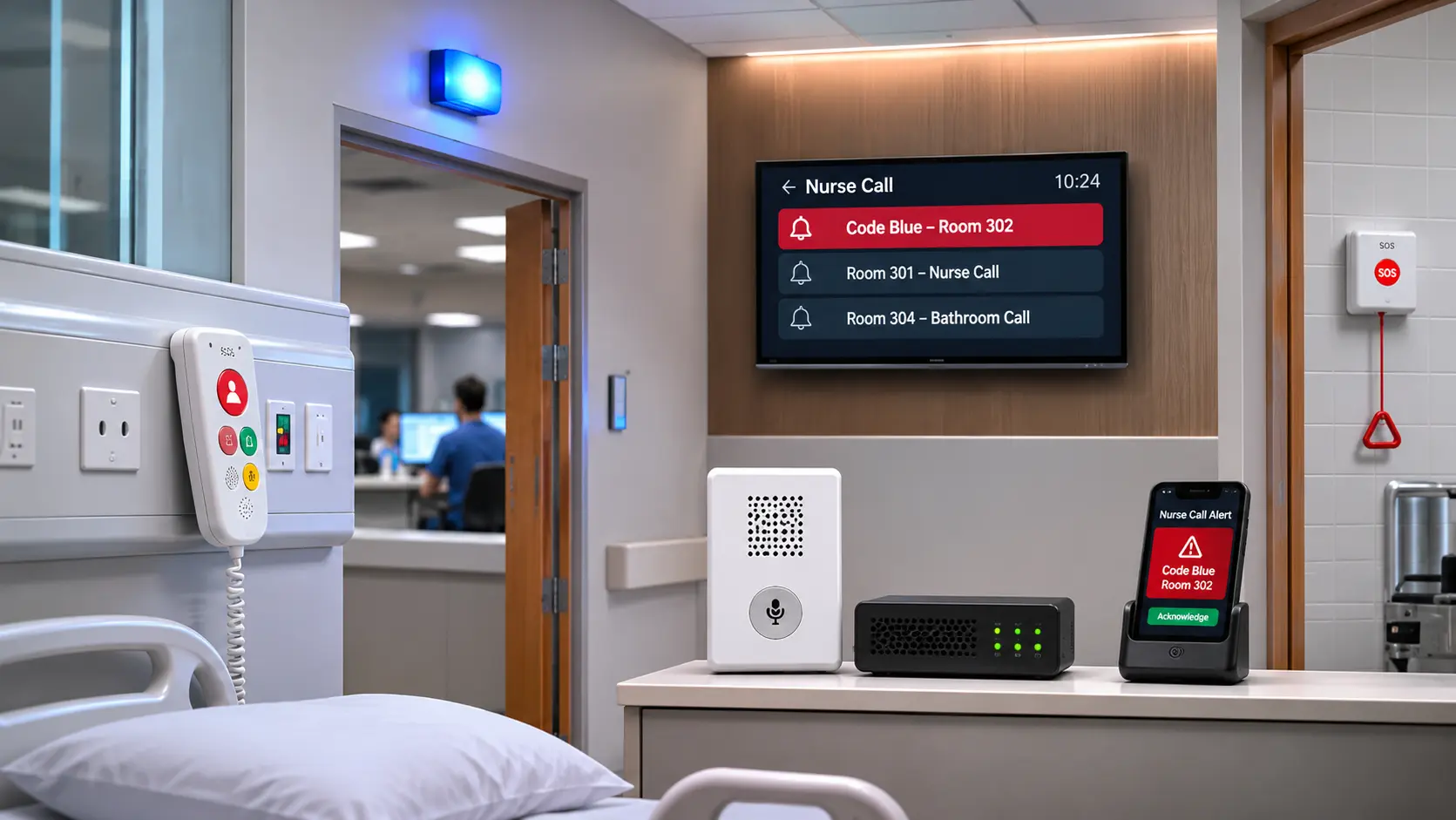
| Component | Purpose |
|---|---|
| Bedside nurse call button / handset | Lets the patient request help, designed for limited mobility where needed |
| Bathroom emergency call button (pull-cord) | Provides emergency calling in higher-risk wet areas |
| Corridor indicator light | Shows outside the room that a call is active and its type. For a Code Blue, it lets nurses passing by see the emergency and help immediately |
| Nurse station display / annunciator | Shows calls with room identification and priority, including Code Blue alerts |
| Call reset / acknowledgment device | Lets staff confirm the request was attended and clear the call |
| Intercom communication | Provides two-way voice between patient and staff, where supported |
| Central controller | Receives signals, applies routing and priority, connects devices |
| Mobile nurse call alerts | Forwards calls to designated staff devices, where supported |
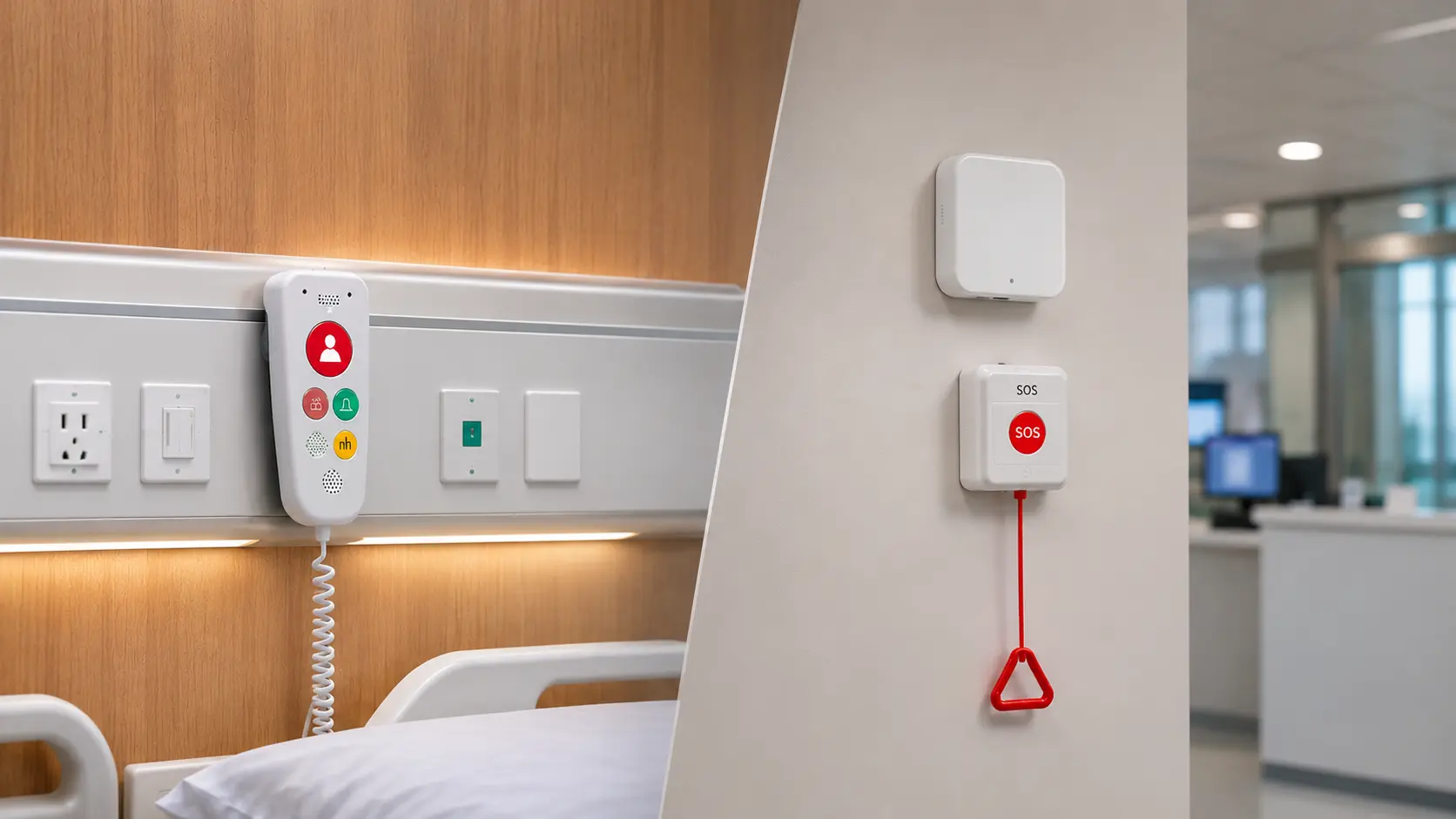
Dedicated cabling connects devices to the controller. Common in new builds and major refurbishments where containment is planned. It offers stable operation, but needs more installation coordination.
Radio communication reduces cabling. It suits existing buildings and phased upgrades, and expansion is often simpler. A coverage survey is essential, and batteries need regular checks.
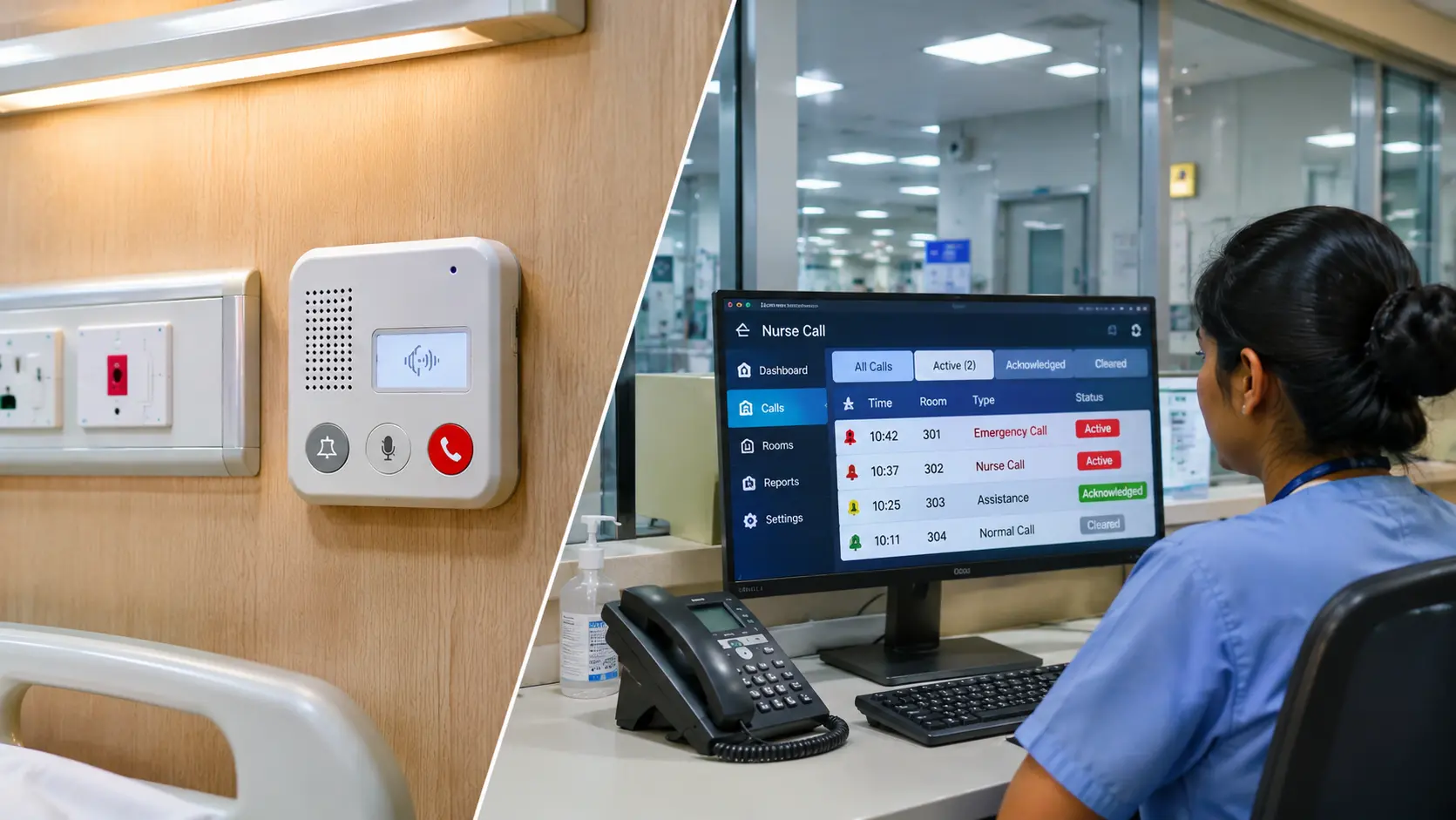
Adds two-way voice so staff can assess a request before attending the room.
Runs over the facility network and may support call prioritization, centralized monitoring, staff notifications and integration. It requires coordination with the hospital IT team.
| Wired | Wireless | |
|---|---|---|
| Best for | New builds, major refurbishments | Existing buildings, phased upgrades |
| Installation | More cabling | Less intrusive |
| Expansion | Planned at design | Often easier |
| Maintenance focus | Cabling, panels | Batteries, coverage |
Many projects combine both. A site survey shows what fits.
Nurse call solutions are designed around the needs of each healthcare environment, helping patients request assistance and enabling staff to respond through clearly defined workflows.
Coverage typically includes patient rooms, wards, nursing stations, emergency departments, recovery areas, bathrooms and isolation rooms (where intercoms can reduce room entries). Code Blue indications are usually specified for wards and patient rooms, so the corridor light shows nurses passing by where the emergency is, while the nurse station alert brings the team from there.
Selection starts with the clinical workflow: bed count, care zones, call types, network and ELV integration, consultant requirements and maintenance responsibility.
ICUs need dependable communication and defined escalation for urgent and staff-assist calls, specified at design stage. Code Blue indication outside the room and at the nurse station is defined together with the unit's emergency procedure.
Smaller facilities need simple, reliable call setups. Wireless options can limit disruption in an operating clinic.
Accessible devices, bedroom and bathroom call points and wide-area coverage are the priorities.
Depending on the system and building, nurse calls can be coordinated with the hospital network, staff communication devices, intercom and other ELV systems such as CCTV and ICT. Scope is defined during design, since it depends on the equipment and the systems on site.
ELV Integration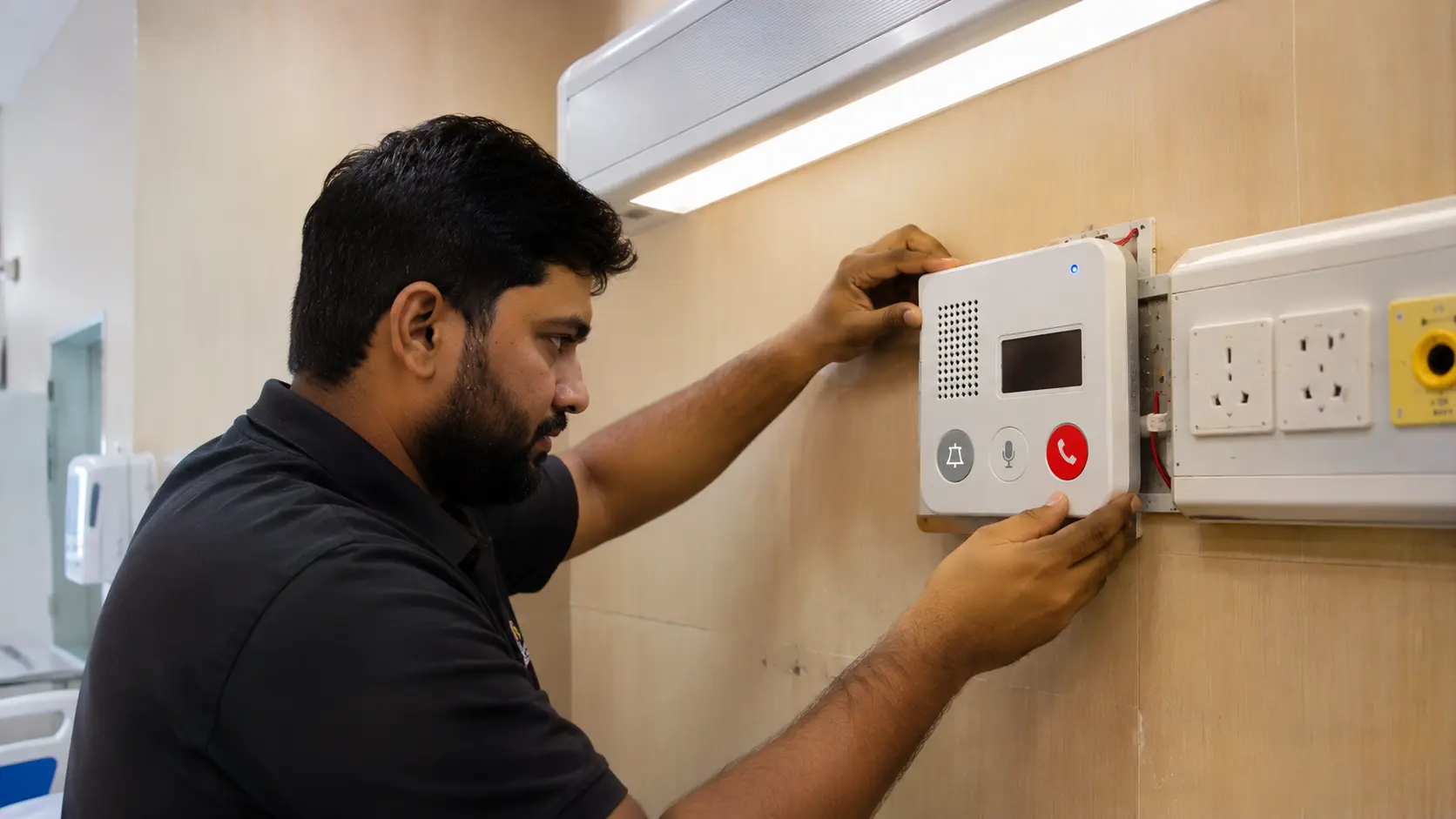
Our approach: requirement review, site assessment, proposal and BOQ, installation and integration, testing and handover. Work in live hospitals is sequenced to limit disruption. Code Blue indications are tested at handover, together with the other call types. For a quotation, send floor plans, bed or room count, system preference and consultant specifications.
Regular testing of call buttons, pull-cords, Code Blue call points, panels and indicators, plus battery and coverage checks on wireless devices. AL IMTEDAD offers technical support and Annual Maintenance Contracts, with scope and response times agreed in the contract.
Price depends on the number of beds and rooms, system type, features such as intercom, Code Blue and mobile alerts, site conditions, integration scope and support. We quote per project from your drawings.
Dubai-based ELV and ICT provider with 20+ years in the market
Systems matched to your workflow, not a fixed package
ELV coordination across CCTV, ICT, AV and hospital IPTV
Design, installation, integration and AMC support
Dubai first, with support across the UAE
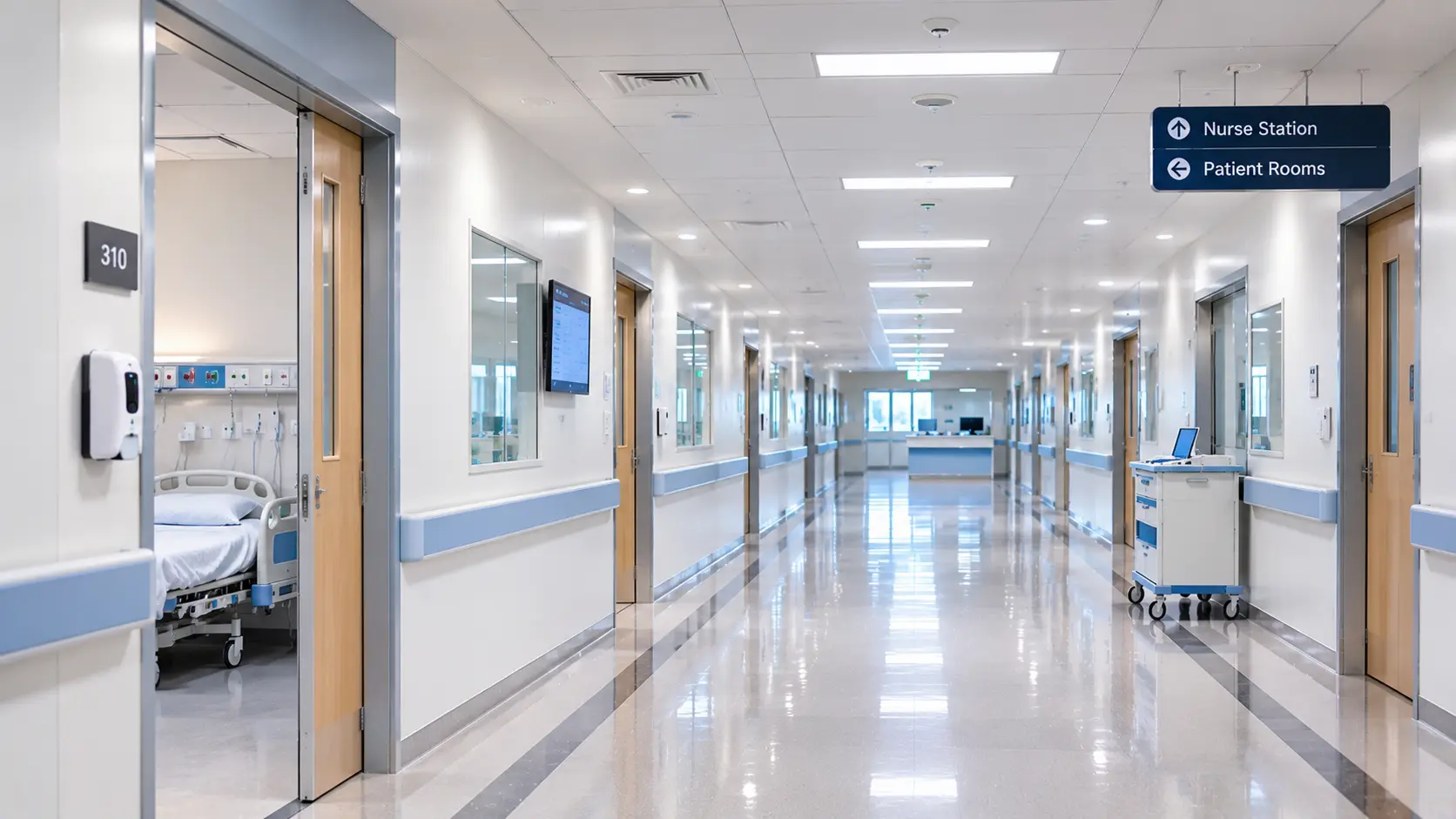
Share your drawings, bed schedule or BOQ and our team will recommend a suitable approach.
AL IMTEDAD Electronics L.L.C, P.O. Box 120588, Dubai, UAE